Ideally, a CO2 cylinder should be stored upright, secured against falling over, in a cool, dry, and well-ventilated area. The main concern is not fire risk, as CO2 is not flammable, but rather the risk of a leak: Escaping gas can accumulate in small, enclosed, or sunken rooms and displace oxygen. This applies to a spare cylinder just as much as to a cylinder already connected to a dispensing or table-top water system. For connected systems, the specifications of the respective system must also always be observed. The guide How to correctly set the CO2 pressure regulator helps ensure safe commissioning after connection.

Storing a CO2 cylinder
Why escaping CO2 is underestimated
CO2 is neither flammable nor the actual explosion risk as a gas. Nevertheless, it is often underestimated because escaping CO2 can displace oxygen in enclosed rooms and accumulates particularly close to the floor. This is why small, poorly ventilated, or sunken areas such as basement zones, shafts, or narrow niches are particularly critical. The second area of risk is the cylinder itself: it is a pressure vessel. Therefore, heat, damage, leaky connections, and improper handling are particularly dangerous, not storage itself.
Storing CO2 cylinders correctly at home: the basic rules
- Always store and operate the cylinder upright and secure it against rolling or tipping over. If stored horizontally, liquid CO2 can enter the pressure regulator.
- Protect the valve and connections; existing protective caps should remain in place as long as the cylinder is not connected. Use only suitable, intact gas cylinder accessories (e.g., wall brackets, protective caps) and regularly check connections for leaks.
- Do not fill, repair, or tamper with the cylinder yourself. Keep children and unauthorized persons away.
- Treat spare cylinders and connected cylinders according to the same safety principles. Once the cylinder is connected to a system, the manufacturer's specifications for the device also apply.
Which storage location is suitable - and which is not
| Storage location | Assessment | What matters |
|---|---|---|
| Covered, well-ventilated outdoor area | Well suited | Often the simplest solution if the cylinder is upright, secured against falling over, and not left freely accessible. |
| Above-ground indoor area with permanent ventilation | Suitable with conditions | The area should be sufficiently large, dry, and well-ventilated. Narrow corners, enclosed niches, or poorly ventilated cabinets are unsuitable. |
| Workroom or technical area | Only according to additional specifications | Outside purely private areas, stricter rules may apply, for example regarding placement or special cabinets. |
| Basement, shaft, pit | Not suitable | In sunken areas, escaping CO2 can accumulate and linger longer. |
| Cabinet without air exchange, under-table niche | Not suitable | Small volumes and lack of ventilation make even minor leaks more problematic. |
| Hallway, escape route, directly next to heat sources, or in direct sunlight | Not suitable | Here, unfavorable heat exposure, tripping or collision risks, and blocked routes in an emergency come together. |
Important: You should also treat empty or briefly stored cylinders according to the same location rules as full spare cylinders. "Just briefly" does not make an unsuitable location safer.
Correctly assessing temperature, sunlight, and room size
Store a CO2 cylinder cool and dry, not next to radiators, ovens, or other strong heat sources, and not in direct sunlight. As the temperature rises, the pressure in the container also increases. For indoor spaces, not only the location matters, but also air exchange and room volume. As a practical value, around 17 m³ of room volume per kg of CO2 is often used so that a complete leak in an enclosed room does not lead to a concentration of more than about 3%. Small rooms, under-table areas, or narrow technical zones may therefore require better ventilation or a CO2 alarm. Outdoor storage in winter is only sensible with a closed valve, disconnected cylinder, and protection against impact, snow, ice, or falling objects.
How long a CO2 cylinder is usable - and when the test date matters
Whether a CO2 cylinder is "usable" does not simply depend on the age of the contents during storage. The condition of the container, the legible marking, and the test status are decisive. Even seemingly empty cylinders can still contain residual pressure or residual gas and therefore must not be treated like harmless metal containers. If you see damage, corrosion, a conspicuous valve, or unclear markings, the cylinder should be removed from normal use and clarified with the supplier, manufacturer, or filling company. The testable condition of the cylinder is therefore more important than the mere time it has spent in the basement, shed, or storage room.
How Trautmeyer practically approaches the topic for dispensing and table-top water systems
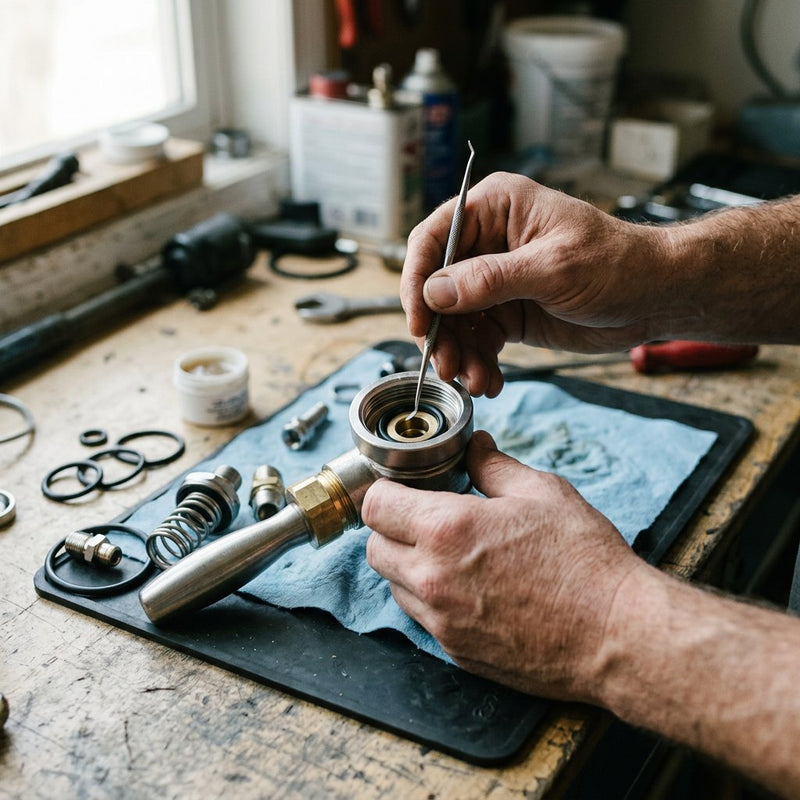
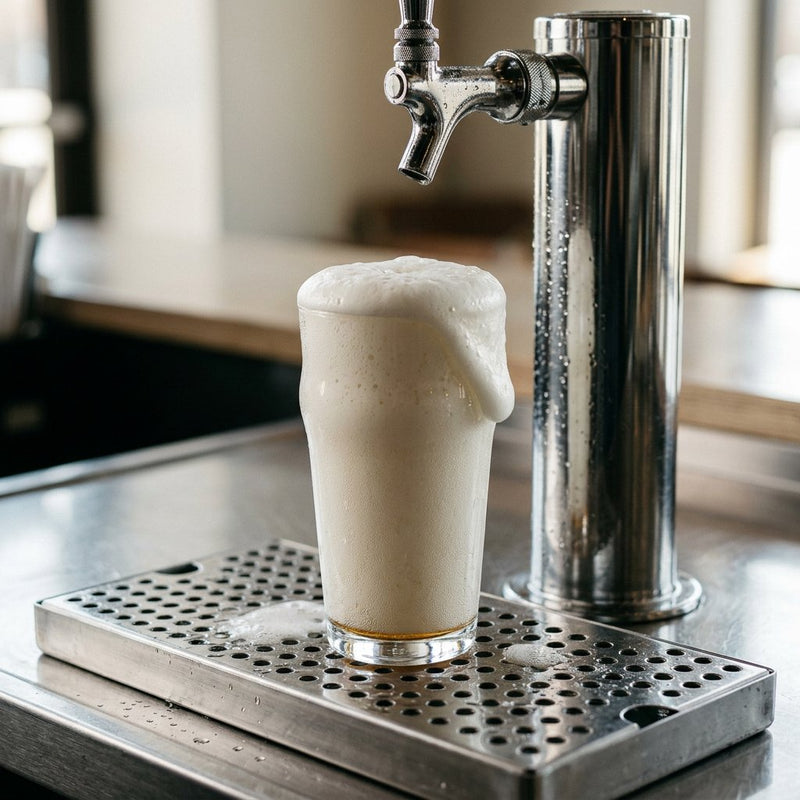
With dispensing systems and table-top water systems, safe storage is rarely considered in isolation. In practice, the placement, upright cylinder position, tightness of connections, suitable CO2 pressure regulator, and neat hose routing come together. It is precisely in this environment that Trautmeyer moves with draughting and beverage technology around dispensing systems, table-top water systems, CO2 cylinders for dispensing systems, CO2 pressure regulators, as well as beer and CO2 hoses. For a purely spare cylinder, the general storage rules are usually sufficient. Once the cylinder is connected, the device-specific instructions of the respective system also become important. If you are unsure about suitable components, you can also find contact options on the Trautmeyer website for guidance.
Special storage cases briefly answered
Some everyday situations seem harmless but are often underestimated. Here is the brief assessment for typical questions around basements, hallways, and an already problematic placement.
Can an empty CO2 cylinder be stored in the basement?
As a rule, you should not store an empty CO2 cylinder in the basement either. "Empty" does not automatically mean gas-free: residual pressure or residual CO2 can still be present. Sunken and poorly ventilated rooms are particularly unsuitable because escaping CO2 can accumulate there. Therefore, treat empty cylinders until return, exchange, or further clarification according to the same location rules as full cylinders: upright, secured, and in a well-ventilated, suitable area.
Is it okay to briefly store it in the basement or hallway?
No, an unsuitable location does not become safe just because the cylinder is only stored there briefly or overnight. Basements remain problematic due to the possible accumulation of CO2, and hallways or other traffic and escape routes are fundamentally not a sensible storage location. It is more sensible to bring spare cylinders directly to the designated safe storage location instead of temporarily parking them elsewhere. This reduces both the risk of a leak in the wrong place and the danger of the cylinder being bumped or forgotten.
What to do if a CO2 cylinder is already stored incorrectly or CO2 is escaping?
If a leak is suspected, you should first ventilate thoroughly and not continue to operate the cylinder in a small, enclosed room. If it is stored incorrectly but no gas is escaping, move it as quickly as possible to a suitable, well-ventilated location and secure it upright there. If a leak is suspected, only move the cylinder to a safe area if this is possible without additional risk. Otherwise, evacuate the area and call for professional help. Before reuse, the valve, seals, and CO2 pressure regulator should be checked for leaks instead of simply reconnecting the cylinder.