If the glass ends up with almost nothing but foam when you pour, the cause can usually be narrowed down by looking at how the problem develops: If the beer foams from the very first glass, the temperature, pressure, or the glass itself is often the cause. If it gets worse after a few liters, the keg, line, or system is often warming up, or the settings are drifting. Small deviations are particularly noticeable with wheat beer. Usually, there is no single problem, but rather an imbalance of temperature, CO₂ pressure, pouring technique, glass condition, and a clean beer line. If the cause lies with the components, suitable pressure regulators, faucets with compensators, cleaning agents, or spare parts often help.

Pouring beer: too much foam
Why too much foam is created when pouring in the first place
Too much foam is created primarily when CO₂ escapes from the beer too quickly. This is usually caused by too high a temperature, unsuitable pressure, turbulence when pouring, or problems with the glass, faucet, or beer line. A normal head of foam is expressly desired, however, as it is part of a clean pour. It only becomes problematic when the glass is filled predominantly with foam instead of beer. The timing is important for troubleshooting: If it foams immediately, check the temperature, pressure, and glass first. If foam formation increases later, heating up, contamination, or a technical problem are more likely causes. If it only occurs with certain beer styles, the beer itself is reacting more sensitively.
Check the temperature first: keg, system, and resting time
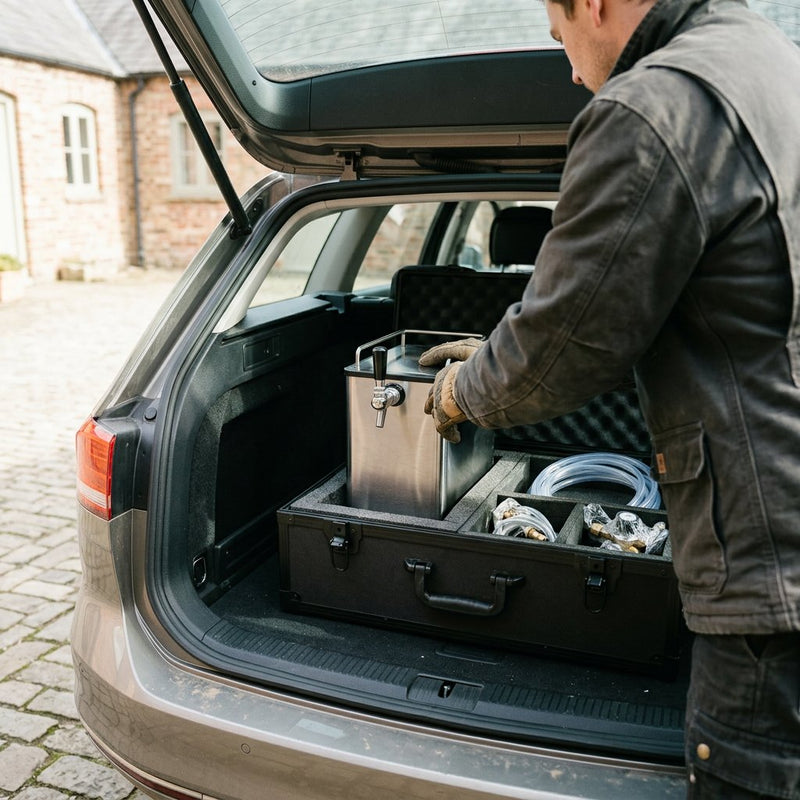
When there are foaming problems, it is almost always worth checking the temperature first; especially with mobile systems, the topic of properly pre-cooling through-flow coolers is often crucial.
- If the keg is too warm, CO₂ escapes more easily from the beer. This quickly leads to an unstable pour with a lot of foam.
- Even with a cold keg, a still-warm line, an un-precooled dispensing head, or a warm faucet can cause the first glasses to foam up heavily.
- A freshly transported, rolled, or moved keg should rest before being tapped so that the carbonation and temperature can stabilize again.
- After connecting a new keg, the first 2-3 glasses may be slightly more unstable until the system has thermally settled.
- If foam formation increases during continuous dispensing, check for heating caused by the environment, lack of ventilation, or cooling that cannot keep up consistently.
Correctly setting the pressure and CO₂
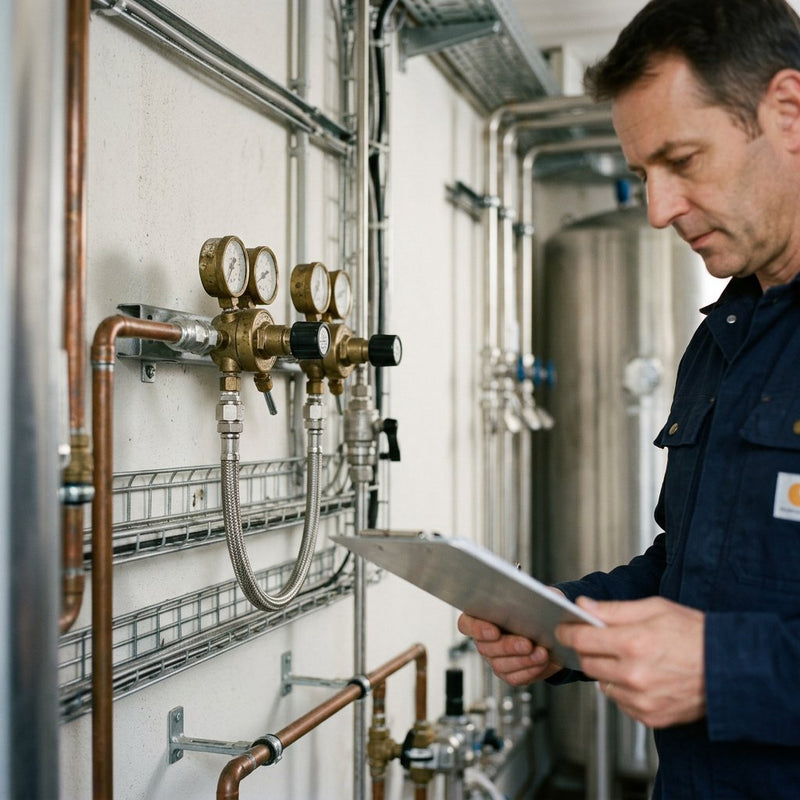
When correctly setting the CO₂ pressure regulator, there is no one-size-fits-all bar value for every system or every beer style, not even for wheat beer.
| Topic | What to look out for | Important to know |
|---|---|---|
| CO₂ pressure | Too high a pressure promotes unnecessarily high foam, while too low a pressure makes the pour unstable. | The correct setting depends on the beer, temperature, line, and system setup. |
| Saturation pressure and dispensing pressure | The carbonation or saturation pressure keeps CO₂ in the beer, while the dispensing pressure ensures a clean pour. | The two are not automatically the same value and should be matched to the respective system. |
| Pressure regulator and compensator | The pressure regulator is intended to regulate cleanly, while the compensator faucet controls the flow. | Open the faucet fully instead of restricting the flow with a half-open faucet. |
Avoiding foam with the right pouring technique and clean glasses
When pouring itself, a calm pour is primarily what matters. Further practical tips can be found in The right beer pouring techniques. Hold the glass at an angle, open the faucet fully, and let the beer run along the side of the glass. Only towards the end do you straighten the glass so that an even head of foam can form. The same applies to correctly setting the compensator faucet: If the faucet is only partially opened, the pouring process is interrupted, or the beer is poured into the glass from too great a height, turbulence is created. It is precisely this turbulence that causes CO₂ to escape more quickly and creates more foam.
The glass is just as important. Clean, grease-free, and cold-rinsed glasses deliver significantly better results than warm, dry, or dusty glasses with detergent residues. Unsuitable glasses can also negatively affect foam formation. Therefore, you should not improve a stable head of foam with more pressure or improvised tricks, but with a suitable, clean glass and a continuous, calm pour.
Wheat beer often reacts more sensitively than pilsner
Wheat beer naturally foams more and finer than many other beer styles. Therefore, even small deviations in temperature, pressure, or pouring technique become noticeable more quickly than with pilsner or altbier, for example. This does not automatically mean that there is something fundamentally wrong with the system. The development is what matters: If the pour starts well and the foam only increases significantly later, the cause is often more likely to be heating, pressure drift, or a problem in the dispensing line than the beer style alone. Wheat beer simply makes such deviations visible sooner.
If cleaning or components are the cause
If the problem persists despite correct operation, it is worth looking at cleaning and technology; you should also check the topic of Cleaning beer lines – step-by-step.
- Switch off the system before checking and depressurize it according to the system and manufacturer's specifications before inspecting or cleaning components.
- Dirty outlets, dried beer residues, narrowed nozzles, or residues in the dispensing line disrupt the flow and cause the beer to foam more.
- Clean regularly with suitable cleaning agents so that residues do not build up and hygiene as well as pouring quality is maintained.
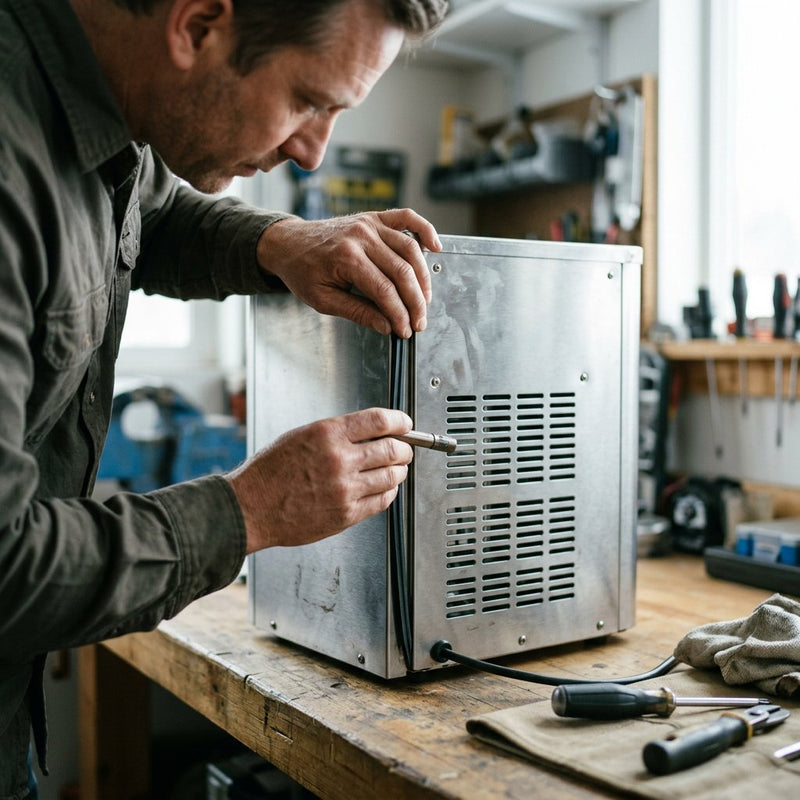
- If the outlet, seals, lines, compensator, or regulator are damaged or worn, readjusting usually only helps in the short term. Such parts should be replaced.
- If the system does not cool sufficiently despite correct handling, also check the ventilation, fans, sensors, and other cooling components. For such cases, you will find suitable cleaning products, CO₂ pressure regulators, and spare parts for dispensing technology at Trautmeyer.